THE HISTORY OF NON-ALCOHOLIC BEVERAGES
Non-alcoholic wine is no longer young: for more than a century, the process of de-alcoholizing wine and beer, i.e. removing alcohol, has used innovative technologies such as heat, evaporation and careful extraction of aromas, as well as the return of aromas to the final non-alcoholic product. Alcohol is usually removed from wines using one of the three most popular methods, which aim to ensure that the natural characteristics of the wine are preserved as far as possible. For beer, on the other hand, yeasts, which cease to function once a certain alcohol content has been reached, have become the preferred method.
NON-ALCOHOLIC INNOVATIONS
In the first non-alcoholic wine-like drink in the United States, the fermentation process was completely omitted from the manufacturing process.
In 1869, New Jersey dentist and prohibitionist Thomas Bramwell Welch pasteurised unfermented Concord grape juice to create a non-intoxicating "wine" that could be used at communion in the Methodist church. This completely non-alcoholic drink spread to churches across the country and launched the industrial fruit juice industry in the United States. Until 1890, Welch's Grape Juice was known as Dr. Welch's Unfermented Wine.
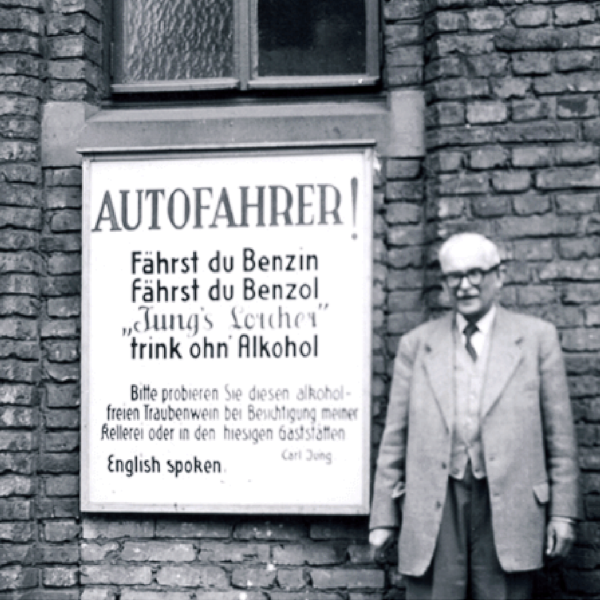
- In 20th century Germany, the Jung family of winegrowers sought to expand the market for their Riesling wines as many customers began to avoid alcohol for health reasons. Carl Jung - not to be confused with the Swiss psychoanalyst who was working on it at the same time - developed a vacuum distillation method that lowered the boiling point of alcohol from 80°C to below 35°C. This avoided the 'cooked' taste of wine caused by high temperatures.
"The aim of my invention is to produce a non-alcoholic beverage that retains all its natural characteristics, appearance and taste - in the case of wine, even its fine bouquet - and offers the same pleasure without the stimulating effect of alcohol."-Carl Jung
Today, Carl Jung Wines produces non-alcoholic wines for consumers in over 25 countries.
- The second cornerstone of modern non-alcoholic winemaking was born in Australia in the 1980s, when food chemist Andrew Craig founded Flavourtech to commercialise his invention, for which a patent was pending at the time. He designed a complex process for extracting essential oils from herbs and spices, capturing the flavours of instant coffee, controlling the taste of dairy products - and, as marketing and advertising expert Tony Dann discovered, adjusting the alcohol content of drinks.
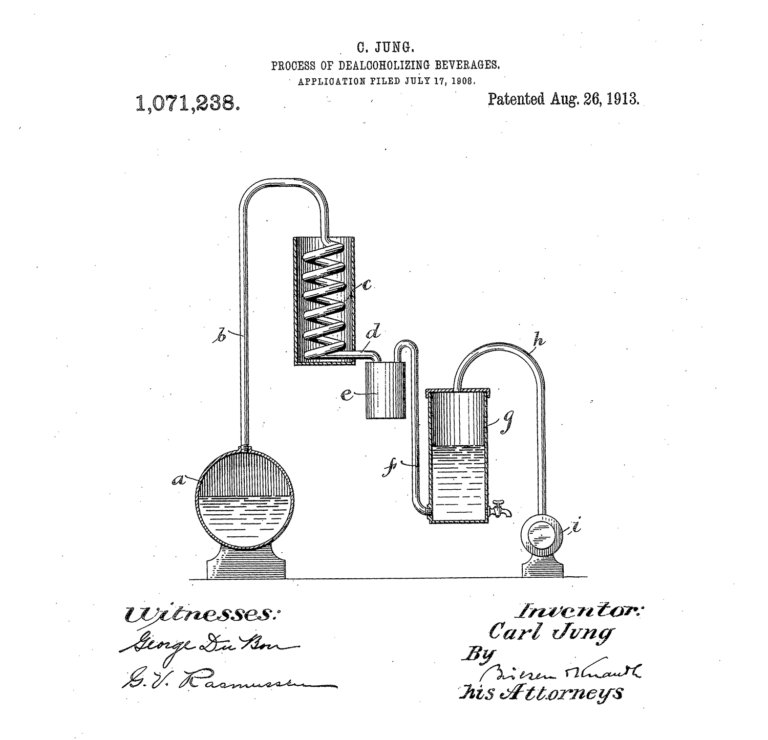
PATENTS FROM A HUNDRED YEARS AGO
De-alcoholization of alcoholic beverages is a fascinating scientific process where skill, temperature control, flavour recovery and patience are rewarded.
VACUUM DISTILLATION - VACUUM DISTILLATION
This method was developed by Carl Jung (a different person from the psychiatrist C. G. Jung) in 1904. This method removes the alcohol at around 28 °C, which prevents heat damage to the wine. The method, also known as Carl Jung method, includes a patented aroma recovery system that preserves the aromas that evaporate during evaporation and ensures a long shelf life thanks to cold sterilisation.
REVERSE OSMOSIS - REVERSE OSMOSIS
In this high-pressure microfiltration process, pure water and alcohol are separated from the wine or beer without altering the taste of the original drink. After separation, the water is combined back into the starting product, preserving its original taste and properties. This method is more often used for beer than for wine.
SPINNING CONE COLUMN (SCC) - SPINNING CONE COLUMN, OR GYRATORY EVAPORATOR
The Spinning Cone Column method is designed for the extraction and recovery of volatile compounds using steam under vacuum conditions. Stainless steel columns have conical vanes attached alternately to the column wall and to a central rotating shaft. The wine is introduced into the top of the column under vacuum, while steam is fed from below.
The vanes provide a large surface area that allows volatile compounds to condense into vapour. Rotation, in turn, creates a thin, even layer of wine on the surface of the cone. This most gentle "extraction" method preserves the natural aromas and flavours of the wine, making it one of the most widely used methods in the industry.
SUBSCRIBE TO NEWSLETTER
Be the first to hear about the latest products, offers, events, and topics!
By submitting, you agree to the terms and conditions.